Wood Rot & Siding Failure in St. Paul homes
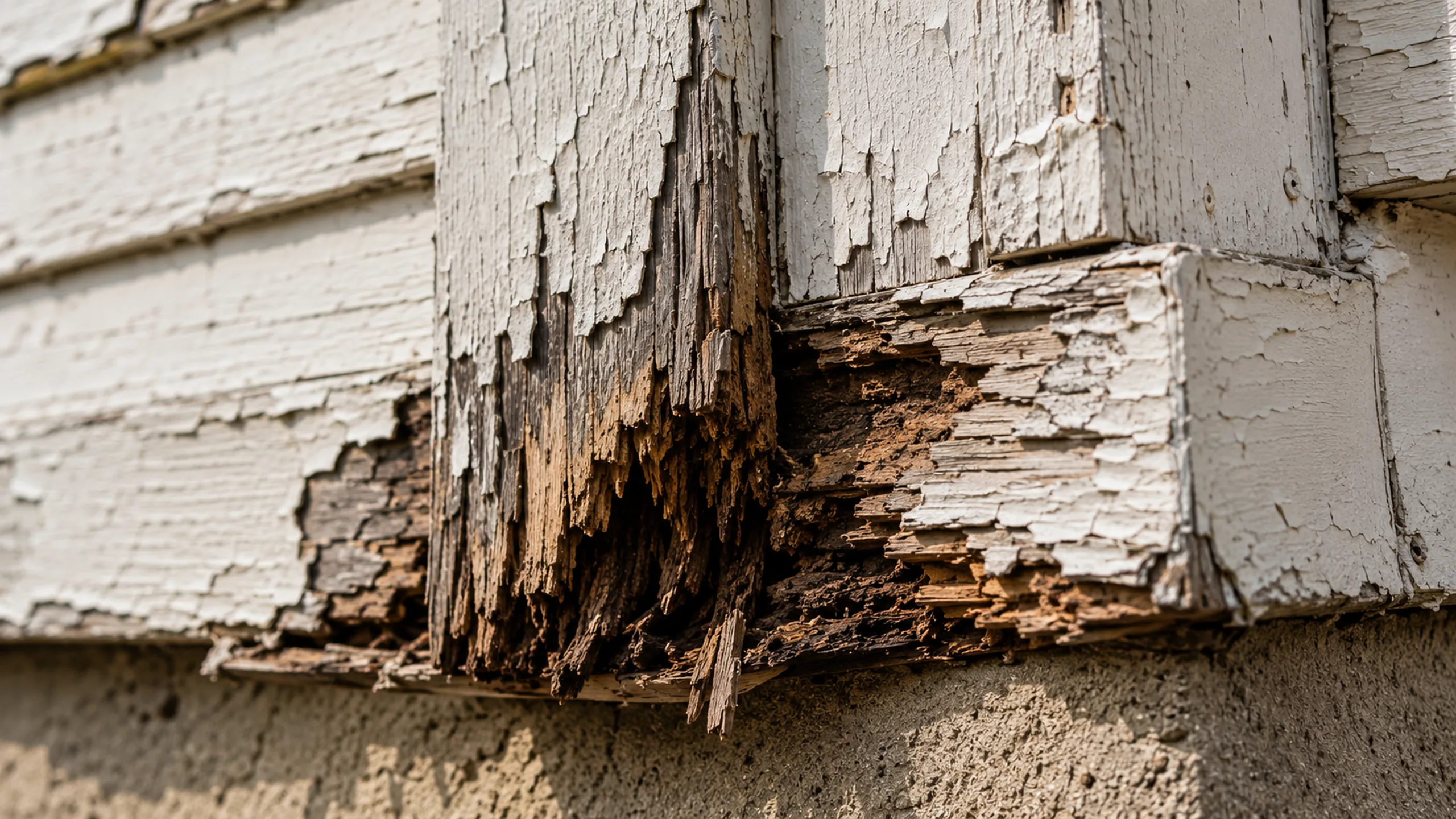
Wood rot and siding failure are the decay and deterioration of a home's exterior wood and engineered siding caused by sustained moisture. It appears as soft, crumbling or swollen wood at trim, soffits, fascia, window and door surrounds, and the lower edges of siding, and as swelling and delamination in engineered products like 1980s–90s hardboard siding.
What wood rot and siding failure are
Exterior wood that stays wet eventually rots, as fungi break down the fibers and leave the wood soft, crumbling or spongy. The usual victims are the parts of the house that catch and hold water: trim, soffits, fascia, window and door surrounds, and the bottom edges of siding near grade. Engineered products are vulnerable too — the hardboard and LP siding used heavily in the 1980s and 1990s can swell, delaminate and crumble at the bottom edges and around penetrations when its protective coating fails.
Why it is common in the St. Paul area
Minnesota's freeze-thaw cycle, heavy snow, ice dams and humid summers are hard on exterior wood. Older St. Paul homes have decades of original wood trim and siding to maintain, while the surrounding 1980s–90s suburbs carry the engineered-siding concern. Deferred painting, failed caulking and poor flashing accelerate the decay.
Warning signs
- Soft, spongy or crumbling wood at trim, sills, soffits and fascia.
- Peeling paint, dark staining and swelling at the lower edges of siding.
- Delaminating, swollen or chipping engineered/hardboard siding.
- Gaps and failed caulk at corners, windows and penetrations.
- Siding installed too close to grade or behind splashback zones.
How the inspection catches it
During a home inspection we examine and probe accessible exterior wood for softness and decay, look for the staining and swelling that signal moisture, and note failed paint, caulk and flashing. The same moisture often drives window leaks and deck deterioration, so these are evaluated together.
What to do about it
Rotted wood is replaced and the moisture source — flashing, caulk, paint, grading or gutters — corrected so it does not recur. Catching it early keeps a trim or siding repair from becoming a structural one.
Related service: Home inspection in St. Paul, MN →
Frequently asked questions
What causes wood rot on a house?
Sustained moisture from failed paint, caulk, flashing, gutters or grading lets fungi break down the wood, leaving it soft and crumbling.
Why does 1980s and 90s siding fail?
Engineered hardboard and LP siding can swell, delaminate and crumble at the edges and penetrations once its protective coating fails and water gets in.
Where does rot show up first?
At water-catching details: trim, soffits, fascia, window and door surrounds, and the bottom edges of siding near grade.
How is wood rot fixed?
The rotted wood is replaced and the moisture source corrected — flashing, caulk, paint, gutters or grading — so the decay does not return.
Price your inspection in minutes
Get an instant quote and book your St. Paul home inspection online — no phone tag, no waiting.