Ice Dams in St. Paul homes
An ice dam is a ridge of ice that forms at the edge of a roof and prevents melting snow from draining off. Water backs up behind the dam and can leak into the home, damaging walls, ceilings, insulation and the roof deck. Ice dams are caused by heat escaping into the attic, which melts snow on the upper roof that then refreezes at the cold eave.
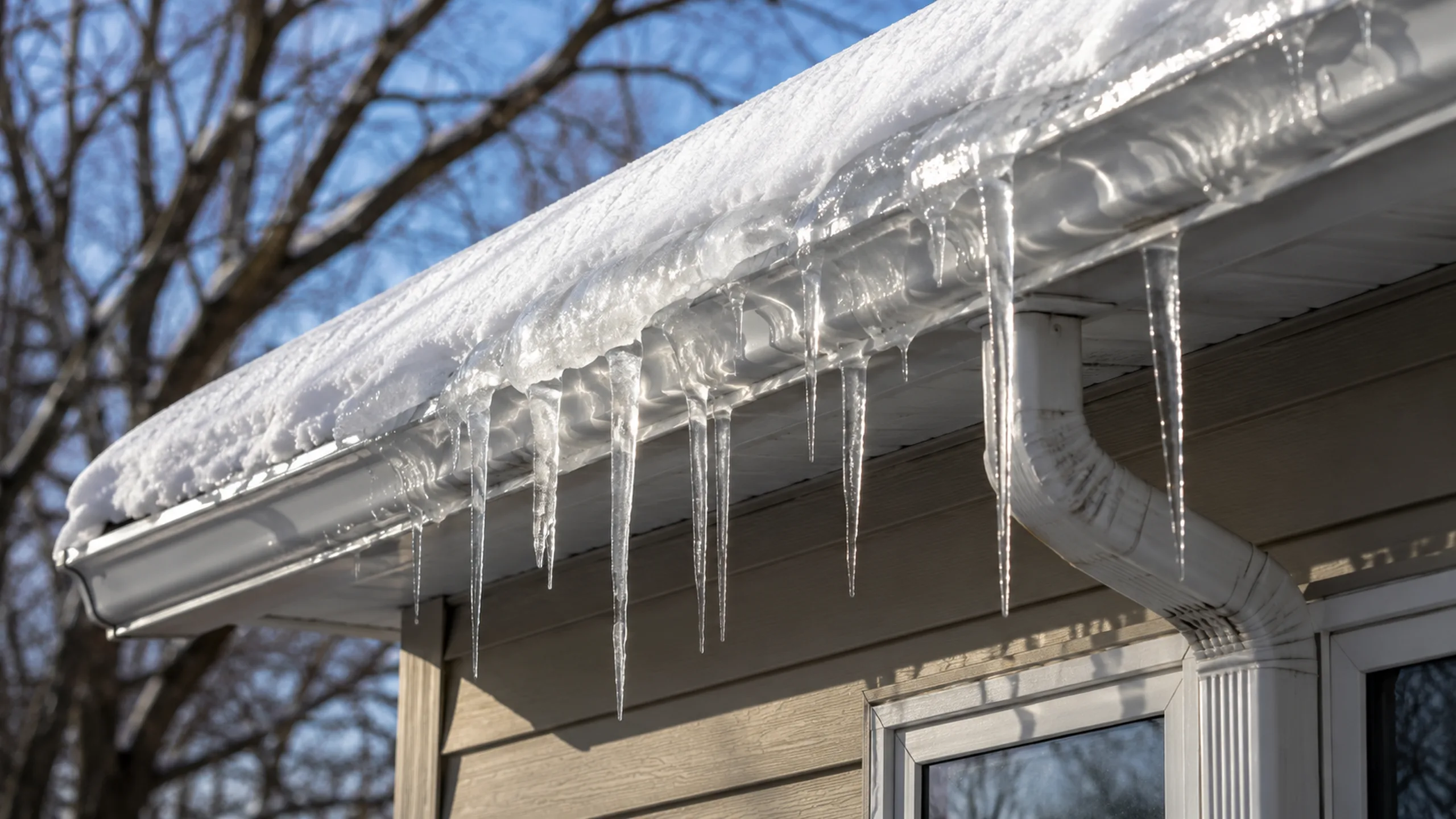
What an ice dam is
An ice dam forms when heat escaping into the attic warms the roof deck, melting the snow above. That meltwater runs down the roof until it reaches the cold overhang at the eave, where it refreezes into a growing ridge of ice. As more water backs up behind the dam, it finds its way under the shingles — which are designed to shed water flowing downhill, not to hold back standing water — and leaks into the roof deck, attic, walls and ceilings below.
Why ice dams are so common in St. Paul
St. Paul's combination of heavy snowfall, sustained subfreezing temperatures and a large stock of older homes is a recipe for ice dams. Many pre-1950 homes have minimal attic insulation, knee walls and complex rooflines, plus air bypasses around chimneys, light fixtures and the attic hatch that leak warm air upward. The result is a warm roof surface above and a cold eave below — exactly the conditions that build an ice dam every hard winter.
Warning signs
- Large icicles hanging from the gutters and eaves.
- Visible ridges of ice along the roof edge.
- Water stains on ceilings or at the top of exterior walls, especially after a thaw.
- Peeling paint, damp insulation, or attic frost and staining on the roof sheathing.
How the inspection catches it
During a home inspection we look for the evidence and the cause: staining at ceilings and wall tops, damaged or stained roof sheathing in the attic, compressed or missing insulation, air bypasses, and inadequate attic ventilation. Thermal imaging is especially effective here — it reveals the warm air leaks and insulation gaps that drive ice dams before they cause damage.
What to do about it
The lasting fix is to keep the roof deck cold: air-seal the bypasses between the living space and the attic, add insulation to recommended levels, and ensure adequate soffit-to-ridge ventilation. Addressing the heat loss is far more effective than chipping ice every winter. If interior staining is present, evaluating for resulting moisture and mold is a sensible next step.
Related service: Thermal imaging in St. Paul, MN →
Frequently asked questions
Are icicles a sign of an ice dam?
Large icicles at the eaves are a strong warning sign. They indicate snow is melting on the warm upper roof and refreezing at the cold edge.
Why does my older St. Paul home get ice dams?
Older homes often have low attic insulation, air bypasses and complex rooflines that let warm air heat the roof deck, melting snow that refreezes at the eaves.
How are ice dams permanently fixed?
By air-sealing attic bypasses, adding insulation and improving ventilation so the roof deck stays cold — not by repeatedly removing ice.
Can an inspection find ice dam risk in summer?
Yes. We assess insulation, ventilation and air bypasses year-round, and thermal imaging in cold weather makes the heat loss visible.
Price your inspection in minutes
Get an instant quote and book your St. Paul home inspection online — no phone tag, no waiting.