Foundation Cracks in St. Paul homes
Foundation cracks are fractures in a home's concrete, block or stone foundation. Many are harmless shrinkage or settlement cracks, but some indicate structural movement from soil pressure, freeze-thaw cycles or water intrusion. An inspector evaluates a crack's type, width, pattern and any displacement to judge whether it is cosmetic or a concern.
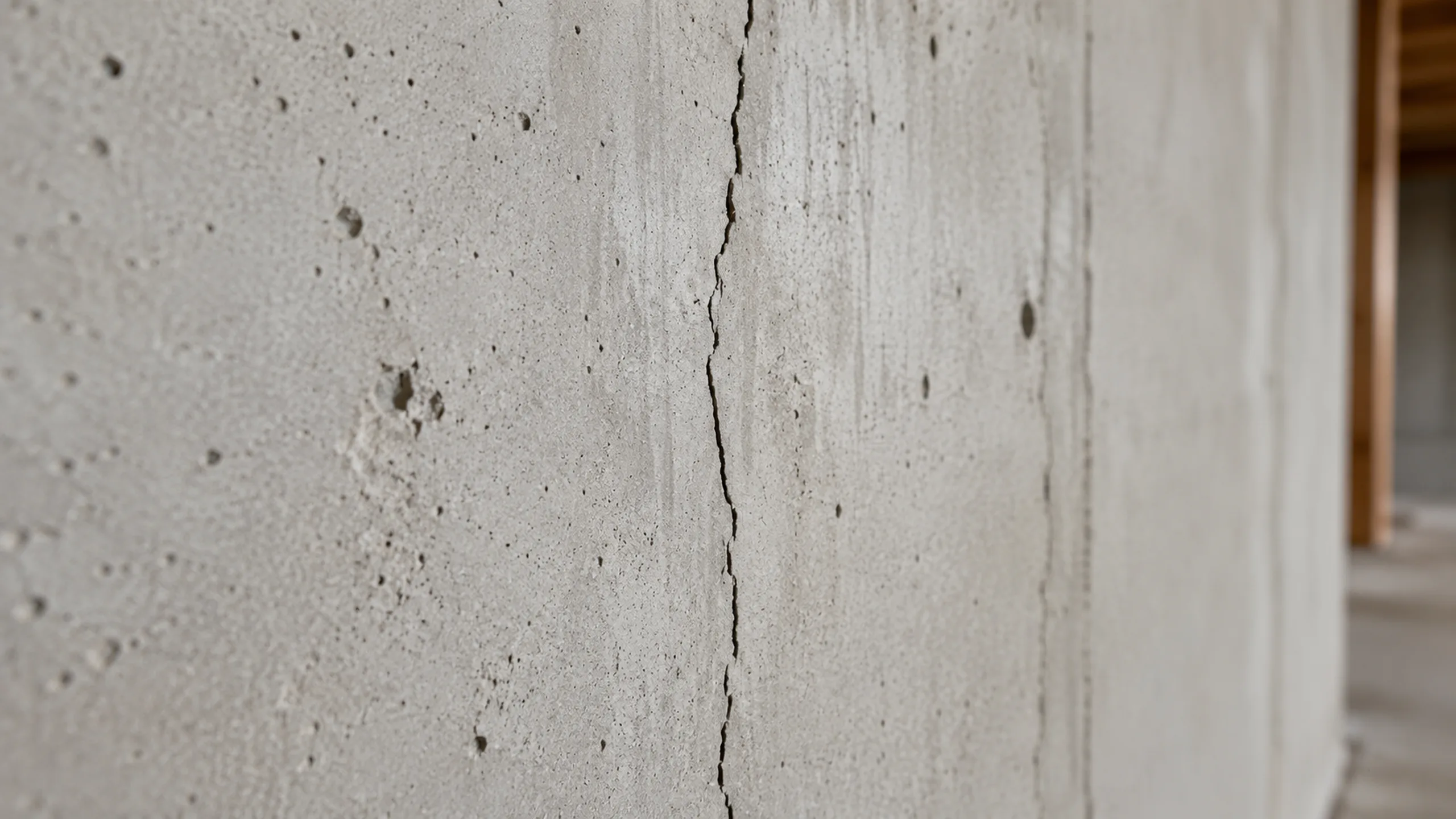
Not all cracks are equal
Foundations crack — the question is which cracks matter. Thin vertical or diagonal shrinkage cracks in poured concrete are extremely common as the concrete cures and are usually cosmetic. Stair-step cracks in block or stone, horizontal cracks, bowing walls and cracks with displacement (one side pushed in or up relative to the other) are the ones that signal structural movement and warrant a closer look.
Why foundation issues are common in St. Paul
The St. Paul area sits on clay-rich soils that expand when wet and shrink when dry, and a deep frost line that drives freeze-thaw movement against foundation walls each winter. Many older homes have stone or concrete-block foundations that are more vulnerable to this movement and to water intrusion than modern poured walls. Add a century of grading changes, downspouts and tree roots, and foundation cracking and seepage become some of the most frequent findings in older neighborhoods.
Warning signs
- Horizontal cracks or inward bowing of basement walls.
- Stair-step cracking in block or stone foundations.
- Cracks wider than about a quarter inch, or cracks that are widening over time.
- Doors and windows that stick, sloping floors, or separation at trim.
- Efflorescence and water staining indicating moisture moving through the wall.
How the inspection catches it
During a home inspection we document the location, type, width and pattern of cracks, note any displacement or bowing, and look for related signs like sticking doors, sloping floors and moisture intrusion. We also evaluate grading and drainage, since water against the foundation is a leading cause of movement. Where a crack suggests structural concern, we recommend evaluation by a structural engineer or foundation specialist.
What to do about it
Cosmetic shrinkage cracks may simply be monitored or sealed. Structural cracks need professional evaluation and may call for foundation repair, drainage correction or grading improvements. Because many cracks are driven by water, fixing grading, gutters and downspouts to move water away from the house is often the first and most important step — and helps with moisture and mold too.
Related service: Home inspection in St. Paul, MN →
Frequently asked questions
Are all foundation cracks a problem?
No. Thin vertical shrinkage cracks in poured concrete are usually cosmetic. Horizontal cracks, bowing and stair-step cracks with displacement are more concerning.
Why do St. Paul foundations crack?
Clay soils that swell and shrink, a deep frost line, freeze-thaw cycles and older stone or block construction all contribute, especially when drainage is poor.
How wide is too wide?
As a general guide, cracks wider than about a quarter inch, or cracks that are actively widening, deserve professional evaluation.
Can drainage really cause foundation cracks?
Yes. Water against the foundation is a leading driver of movement. Correcting grading, gutters and downspouts is often the most important fix.
Price your inspection in minutes
Get an instant quote and book your St. Paul home inspection online — no phone tag, no waiting.