Efflorescence on St. Paul basement & foundation walls
Efflorescence is the white, chalky, crystalline deposit that forms on basement and foundation walls when water moves through concrete, block or stone and evaporates at the surface, leaving dissolved minerals (salts) behind. The crusty residue itself is harmless — but it is a reliable signal that moisture is passing through the wall, which is what an inspector cares about.
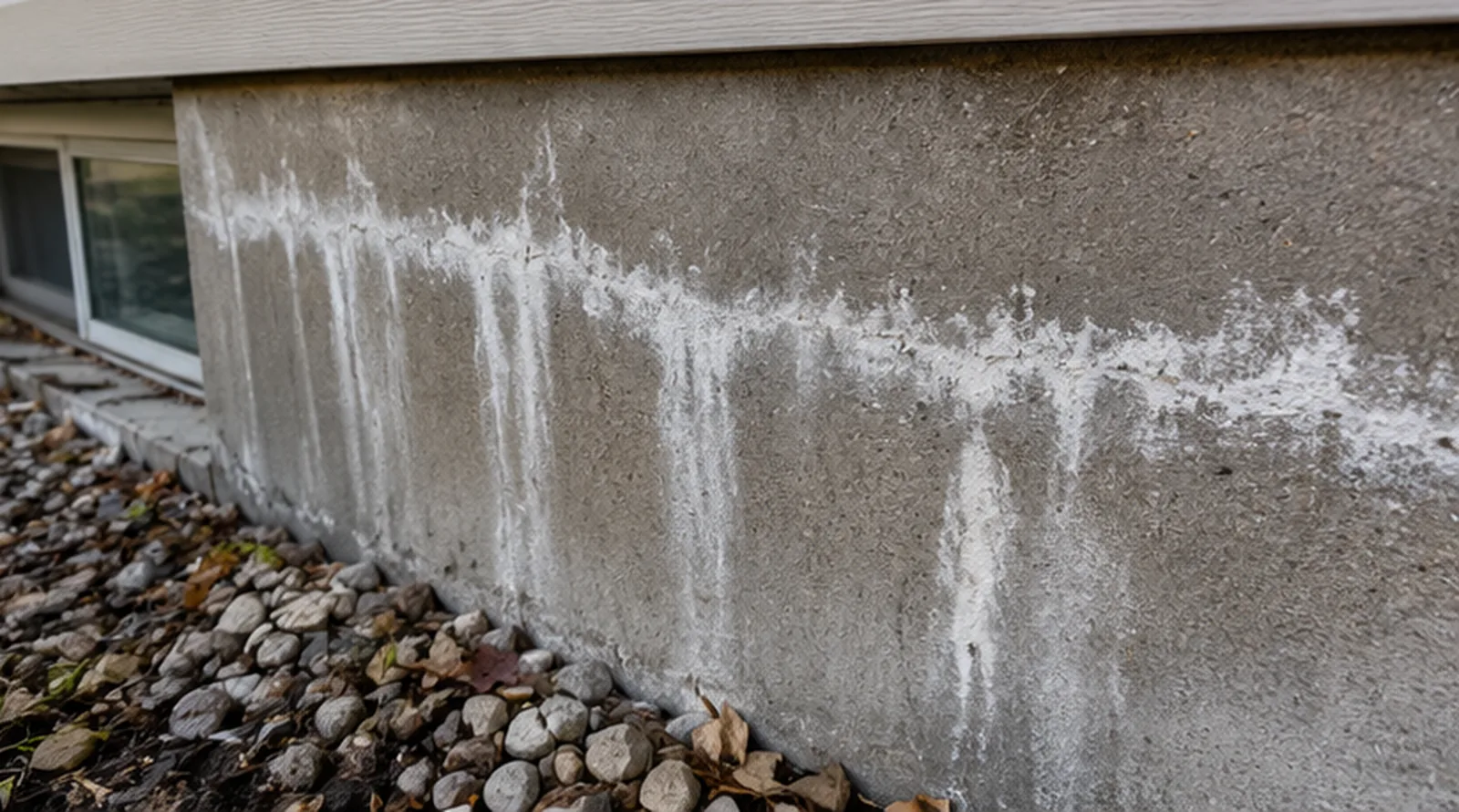
What exactly is the white powder on my basement wall?
Efflorescence (sometimes called “wall salts”) is a deposit of soluble minerals — usually calcium, sodium and potassium salts — carried out of masonry by water. As moisture seeps through a foundation wall or floor and evaporates on the inside surface, it leaves these minerals behind as a white, fluffy or crystalline crust. It often shows up as patches, streaks or a powdery film on concrete block, poured concrete, brick and old stone foundations. You can usually brush or wipe it off, but if the water keeps coming, it comes back.
Why does efflorescence appear in St. Paul basements?
St. Paul gives water plenty of ways into a foundation. The area sits on clay-rich soils that hold water against basement walls and a deep frost line that drives freeze-thaw movement each winter, opening tiny pathways for moisture. Homes near the Mississippi River corridor and in low-lying neighborhoods can sit over a higher water table, increasing hydrostatic pressure that pushes groundwater through the wall. Many older St. Paul homes also have concrete-block or stone foundations that are more porous than modern poured walls. Add a century of grading changes, short or disconnected downspouts and snowmelt pooling near the foundation, and efflorescence becomes one of the more common findings in older basements.
Is efflorescence dangerous, and what does it signal?
The deposit itself is not dangerous and it is not mold — it is mineral salt, not a living organism. What matters is what it indicates: water is actively moving through the foundation. That same moisture can lead to wood rot, rusting fasteners, deteriorating masonry, musty odors and conditions that favor mold growth elsewhere in the basement. In short, efflorescence is a symptom and a moisture indicator, not the disease. Heavy, recurring deposits paired with active dampness deserve attention.
What are the warning signs to watch for?
- White, powdery or crusty patches and streaks on block, poured concrete or stone walls.
- Deposits that return after you clean them off — a sign of ongoing moisture.
- Damp or water staining on the wall, especially low on the foundation. See also foundation cracks, which often appear alongside it.
- Musty smells, peeling paint or spalling (flaking) masonry surfaces.
- Water marks at the base of walls after heavy rain or spring snowmelt.
How does our inspection evaluate efflorescence?
During a home inspection we document where efflorescence appears, how heavy it is and whether the wall is currently damp, using a moisture meter to check readings in suspect areas. We trace the likely water source by examining exterior grading and drainage, gutters and downspout discharge, window wells and any signs of past seepage. We also look for related findings — staining, cracks, and bowing — so the report distinguishes a cosmetic old stain from an active moisture problem in your St. Paul home.
What should I do about efflorescence?
Because efflorescence is a moisture symptom, the fixes target water. The most common first steps are managing water at the exterior: regrading soil to slope away from the foundation, extending downspouts well past the house and clearing window wells. Persistent groundwater intrusion may call for interior or exterior drain tile and a sump system, while a dehumidifier helps control basement humidity. The right combination depends on factors like the foundation type, the severity and source of the moisture, soil conditions and how the lot drains — which is exactly what the inspection helps you understand before you commit to a repair plan.
Frequently asked questions
Is efflorescence the same as mold?
No. Efflorescence is a mineral salt deposit left by evaporating water, not a living organism. It does, however, signal moisture that can encourage mold elsewhere, so it is worth investigating.
Why does it keep coming back after I clean it?
Recurring efflorescence means water is still moving through the wall. Until the moisture source — usually drainage or groundwater — is corrected, the deposits will return.
Why is efflorescence common in St. Paul basements?
Clay soils, a deep frost line, freeze-thaw cycles, a higher water table near the Mississippi and older porous block or stone foundations all let moisture into basements here, especially with poor grading.
Does efflorescence mean my foundation is failing?
Not by itself. It indicates moisture intrusion, not structural failure. We evaluate it alongside cracks, staining and moisture readings to judge whether it is cosmetic or a sign of a larger problem.
Price your inspection in minutes
Get an instant quote and book your St. Paul home inspection online — no phone tag, no waiting.